
Health and Nutrition Program
Kamonyi District (Karama, Rukoma, Gacurabwenge)
Through the INEZA Project supported by Future Generations University, CFO implemented an integrated Farmer Field Learning School (FFLS) with Nutrition Weeks to prevent under-nutrition in the first 1,000 days of life.
25
FFLS Leaders Trained
930
Farmers Trained
522 men, 408 women
25
VSLAs Supported
10,000
Erosion Control Trees Planted
222
Children Under 5 Reached
209
Lactating Mothers Supported
The Story
In 2017, through the INEZA Project supported by Future Generations University, CFO implemented a community-based integrated Farmer Field Learning School (FFLS) integrating Nutrition Weeks in 3 sectors of Kamonyi District.
The objective was to prevent under-nutrition among pregnant women and children under two years, emphasizing the critical importance of the first 1,000 days of life for long-term health and development.
FFLS is a key implementation model where farmers teach farmers. Twenty-five FFLS Leaders were trained and used to train 930 farmers (522 men and 408 women) who are members of 25 VSLAs on saving skills, improved inputs, farming techniques, and nutrition best practices.
Farmer Field Learning Schools
FFLS is a participatory approach where farmers are the teachers. This peer-to-peer learning model ensures knowledge is shared in culturally appropriate ways and stays within the community.
- 25 FFLS demonstration plots established
- Hands-on training in improved farming techniques
- Integration of nutrition education with agriculture
- Formation and support of 25 VSLAs for financial resilience
- 25 FFLS demonstration plots established and maintained
- 930 farmers mobilized towards planting erosion control trees/grasses
- 133 fathers engaged in the nutrition program
- 35 pregnant women supported
- 2 cycles of Nutrition Week sessions conducted
- Community volunteers (Light Mothers) trained as session leaders
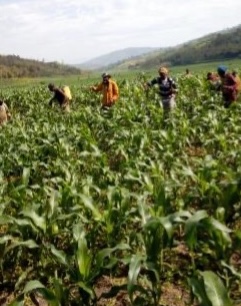
Farmer Field Learning School
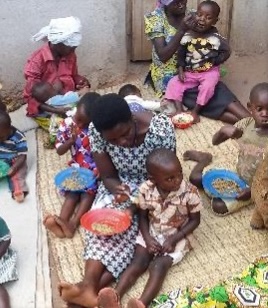
Nutrition Week
Nutrition Weeks
Nutrition Week is a five-day intensive program held 2-3 times each year, designed to teach mothers about proper nutrition for under-five children, pregnant women, and lactating mothers.
Participants gather in small groups of 10 every day for a week. Sessions are led by community volunteers known as “Light Mothers” (Positive Deviant Mothers) who demonstrate successful feeding practices.
Through 2 cycles of Nutrition Week sessions, CFO reached 222 children under 5, 209 lactating mothers, 133 fathers, and 35 pregnant women in Kamonyi District. This engaged mothers in active learning to build self-efficacy.
Program Outcomes
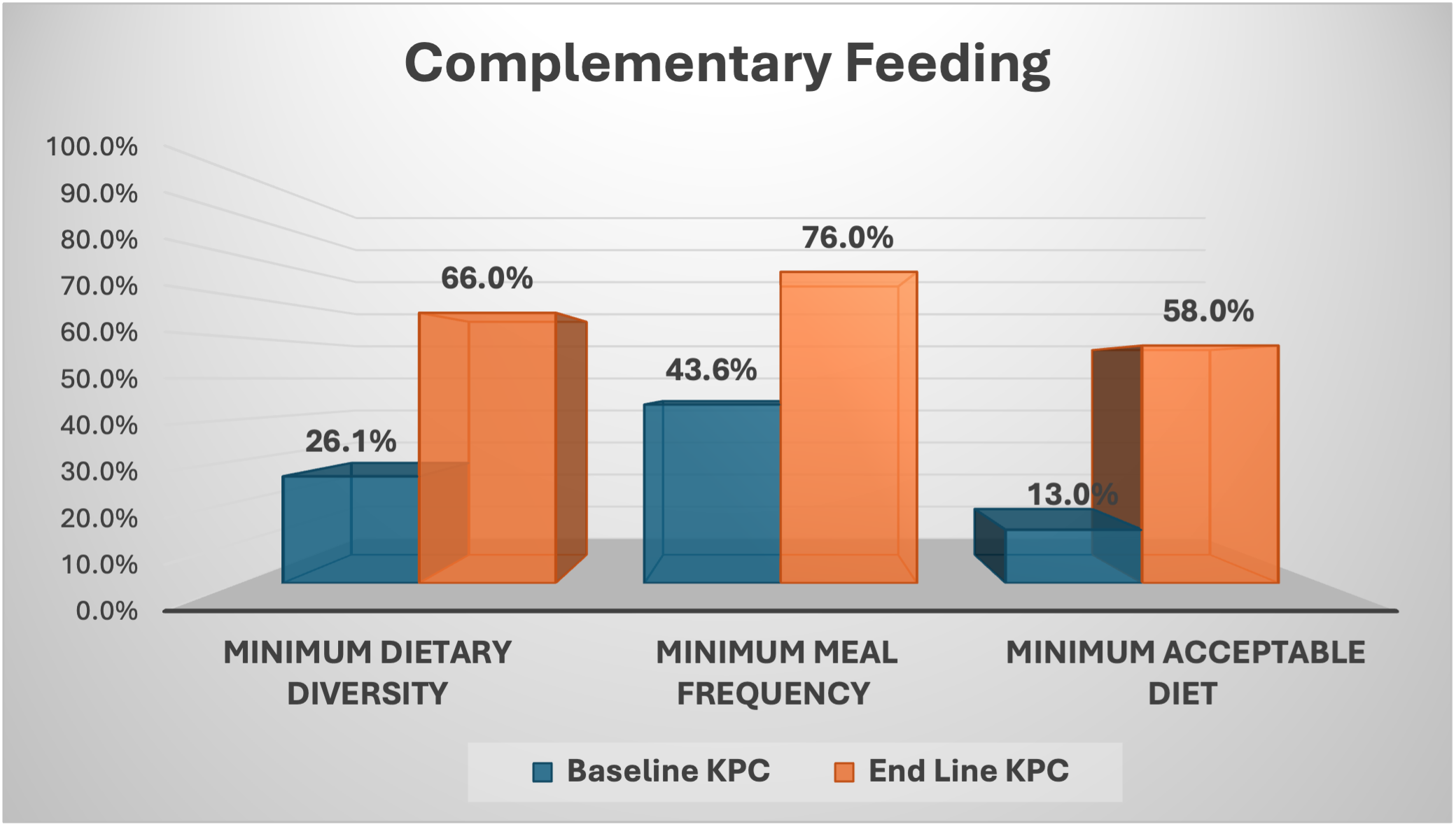
Impact on infant and child feeding practices: Baseline vs End Line KPC Survey
Feeding Practices
Significant improvements in infant and child feeding practices observed
Balanced Diet
Mothers learned to prepare balanced diets with local ingredients
Thicker Porridge
Training on making more nutritious, thicker porridge for children
Father Involvement
Men now participate in food preparation and home chores
Hygiene Practices
Improved hygiene practices and handwashing at NW sites
Knowledge Sharing
Participants share best practices with other community members
What Participants Say
Mothers' Perspective
The mothers, Nutrition Week participants, revealed exciting aspects of the interventions: learning to prepare a balanced diet, making thicker porridge, engagement of husbands in food preparation, assistance in home chores, and sharing best practices with other women.
Fathers' Transformation
The fathers, who previously believed child-rearing was the role of women, are now involved. They became advocates to engage other men. They no longer keep their money but contribute to family meals, take initiative to shop for food, and retain home produce to feed their children.
“During the closing ceremony of the FFLS project, the District in charge of cooperatives was impressed to see how mothers appreciated the project achievements and how the children were looking well-nourished and clean.”
Support Nutrition Programs
Help us reach more families with life-saving nutrition education and support during the critical first 1,000 days.